Brandenburg Gate
- telkamonka
- Nov 28, 2025
- 2 min read
Updated: Feb 7
History: Brandenburg Gate was built between 1788 and 1791 for Frederick William II of Prussia. The gate was designed by Gotthard Langhans. Its model was inspired by the Propylaea at the entrance of the Acropolis in Athens, Greece. In 1793, the gate was crowned with a statue called the Quadriga, a chariot drawn by four horses. When Napoleon invaded Prussia, he took the Quadriga to Paris as a war trophy. After Napoleon’s defeat, it was taken back to Berlin, and an Iron Cross and Prussian eagle were added to symbolize Prussia’s victory. The Nazis adopted the gate as a symbol of their party, using it as a backdrop for multiple propaganda events. The gate was damaged by Allied bombings in the Second World War. After the war, the gate fell into the Soviet sector, and was restricted from both West and East Berlin.
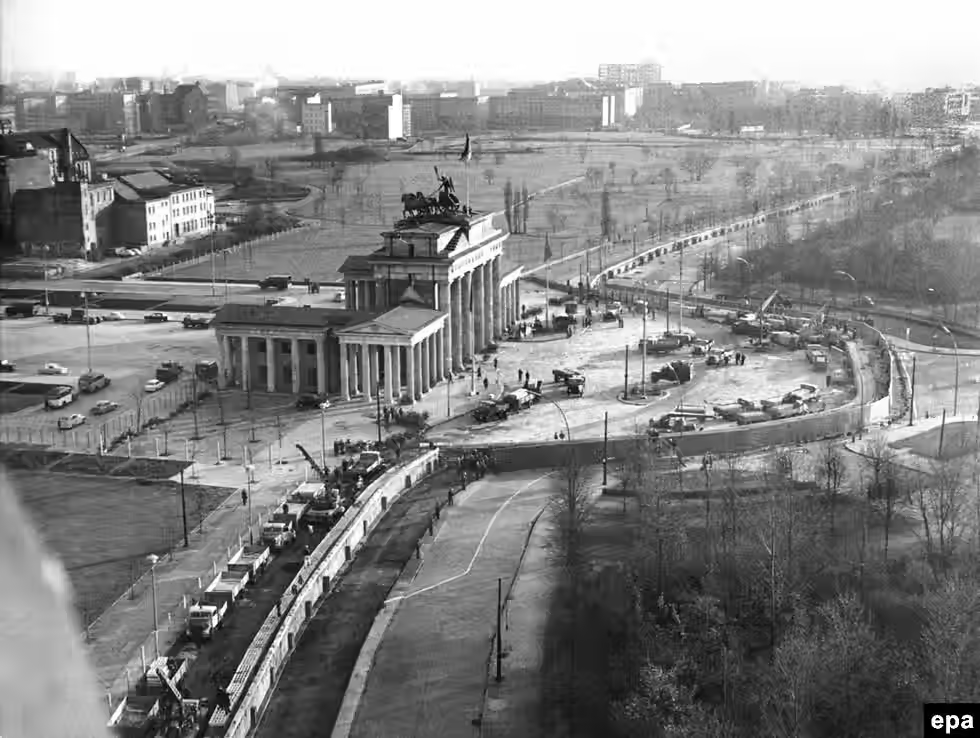
The section of the Berlin Wall near Brandenburg Gate was stormed after the East German government announced the opening of the Berlin Wall. It stood as a symbol of a divided Berlin for three decades, until the Berlin Wall fell. The gate was reopened on December 22, 1989, in a historic ceremony.

Today, Brandenburg Gate stands as a symbol of German reunification and is arguably the most popular German tourist attraction.
My Visit: Brandenburg Gate was crowded when I arrived, but I was able to find a nice spot to take a picture. I observed the gate, and found the Quadriga, which Napoleon stole. Interestingly, I found the embassies of Russia and the United States nearby. While I was at Brandenburg Gate, I thought deeply about its history. It’s a marvel it’s still standing, as it could’ve been easily destroyed by the Soviets in East Berlin. From the royal Hohenzollerns to the modern day, it’s definitely a symbol of German history.

After I was done, I decided to go back to my hotel to finish for the day.
Photo Gallery:


Memories
Your posting brought back many memories for me! My first trip to Berlin was when I was in high school. I was studying German and enrolled in a six week study program with visits in both Austria and Germany. Most memorable for me was the visit to the Brandenburg Gate. It certainly represents a significant time in German history as your research points out!